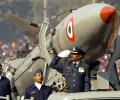
While we have to hiss loudly and do the lunging bit to keep our foes on their toes, that's only a tactical matter. What is the strategic goal? What is the end game? In my opinion, there is only one possible end game: the unwinding of Pakistan into several pieces: Balochistan, Sind, Balawaristan (Gilgit, Baltistan, the rest of PoK), the Pashtun area Khyber Pakhtunwa which will merge with Afghanistan, and the rump Punjab, says Rajeev Srinivasan.

The decision to not attend the forum attended by 28 heads of state and 130 national delegations is a clear break from its usual policy of going along with the crowd.

China is distributing millions of controversial updated maps to its military in the first upgrade in 30 years, reportedly reinforcing its claims over Arunachal Pradesh.

Two hundred years after George Stephenson built the steam-powered Blucher, Open Knowledge pays tribute to 200 years of rail transport.
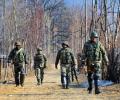
It is often alleged that half the Indian Army is based in J&K. It is bewildering why there has been no rebuttal or clarification of this issue from the central or state governments, or from the army itself, wonders Ajai Shukla.

How will China deal with Taiwan's first woman president? Srikanth Kondapalli explains the significance of a historic election.

'The general perspective -- certainly on Capitol Hill and Congress -- the love for India, the positive feeling for India still focuses on India as a democracy.' 'The more that Indian democracy and its pluralistic features is called into question by Indians, the more that same debate will replay back here.'
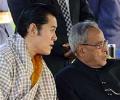
This quiet assertion of China has allowed various smaller countries of South Asia to play China off against India. Most states in the region now use the China card to balance against the predominance of India. Forced to exist between their two giant neighbours, the smaller states have responded with a careful balancing act, says Harsh V Pant.
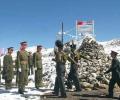
Suddenly the sands are shifting and even friends are acting strange.

'If the dimensions of the strategic partnership worked out by India and the US seem like a grand alliance targeted at you-know-who, China had better realise that it has fathered it,' says B S Raghavan, a long time observer of China.

'When Modi was having his maiden meeting with Donald Trump, China is up to its old tricks again, by causing a distraction on the Doklam plateau,' says B S Raghavan, the distinguished civil servant.
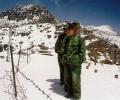
Even as Chinese troops began withdrawing from the Chumar area in Ladakh, the official media in China accused India of "instigating" incidents on the borders to divert attention during important visits of Chinese leaders.
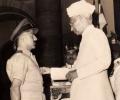
Claude Arpi reveals how Wing Commander Jag Mohan Nath won a second Maha Vir Chakra in the 1965 War.

The Dalai Lama is a huge charmer, knowing how to say things that will please an audience in his gentle avuncular manner.

Experts say the treaty needs a review to address the ongoing and the likely impact of climate change on river-flow

A new book reproduces original Chinese maps that contradict Chinese propaganda. The book reveals Chinese intelligence admissions that Beijing never maintained any army base, customs office or other government function in the disputed area until 1983.
'Make no mistake, depriving water deliberately to a nation of 190 million people is a repugnant idea.' 'The world community won't forgive us.'

'Xi Jinping got a dose of Modi's medicine inside the tent where he was being hosted on the banks of the Sabarmati river.' 'Modi reportedly told him, looking deep into his eyes: "This was not expected of your country. Can you tell me when the troops are withdrawing?".'


There are signs of China's external behaviour becoming more aggressive in the coming years. If that happens, strategic implications for neighbours having territorial disputes with China can become deeper and imperatives can rise for the former to counteract, says D S Rajan

'There are major implications for India. Though there was a transparently thin attempt to project the troop reduction as intended to promote peace, the downsizing is actually part of plans to streamline and strengthen the PLA, capable of defending China's national interests at home and abroad,' says Jayadev Ranade.

The Siang is a dramatic river that flows through a beautiful land. Rafting on it is a rare pleasure the state offers tourists, says Ajai Shukla.

China on Monday said Indian Prime Minister Manmohan Singh's three-day visit from Tuesday is of great importance for deepening strategic partnership amid expectations that the two sides would sign some key pacts, including one to prevent incursions along the LAC.

For India to endorse Nepal's Buddhist conference will be like sipping from a poisoned chalice, warns former RA&W official Jayadeva Ranade.
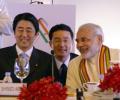
'Both nations have a common problem: A rampaging, jingoistic and hostile China which is making substantial territorial claims. In the long run, Japan and India are going to be the victims of Chinese aggression -- so they might as well hang together to contain China,' argues Rajeev Srinivasan.

One thing Beijing must understand is that India is not obsessed with being a threat to China but only wants a rightful place for itself in the world, says Sanjeev Nayyar.
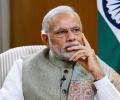
Like Nehru, Modi is loathe to touch the public sector. His policy towards Israel leans towards 'non-alignment'. You can find other similarities: frequent public speeches, personalised leadership, total control over foreign and strategic policies, even stylised dressing, says Shekhar Gupta.

The prejudices the Chinese carry with them mean they are not natural global managers.

Scientists believe the unique geological locations where they are situated makes them worthy of veneration.

More and more CSR is being defined by how a company runs its operations and makes its profits; and just firms donating money to charities.

The contrived controversy over the so-called blockade of the India-Nepal border has obscured the perilous path on which the current ruling elite in Nepal are taking the country towards.

How many of the 354 films Aseem Chhabra watched in 2017 have you seen?

'Those who follow the workings of the establishment believe that Indian diplomacy has managed more by the individual flair and brilliance of a few individuals than its systemic strength or organisational excellence.'
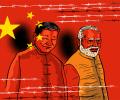
'As China rises and India grows to reclaim their earlier positions on the world stage as two of the largest economies and most important countries, there will indeed be some contention between these two powers.' 'There will also be plenty of space and room for cooperation amongst the two of us.' 'As our economic size increases to match the fact that we are the two most populous nations on earth, it will be all the more important for us to keep the interests of our peoples as well as those of the rest of the world in mind.' 'We shall have to grow together rather than as separate and disparate entities,' points out Ambassador Gautam Bambawale -- who served as India's ambassador to China -- in the 7th annual lecture of the Indian Association of Foreign Affairs Correspondents on March 1, 2019.
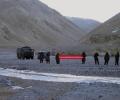
'Demchock and Chumar are important crucibles for both China and India to know about the other. While India 'learns,' she also need to 'teach,' suggests Lieutenant General Anil Chait, one of the Indian Army's most cerebral thinkers, who recently retired as chief of the Integrated Defence Staff.

Fast cars, marathons, golfing and shooting - nothing stops these high-power tycoons from pursuing their passion.

Not many people in Bangladesh are talking about the Teesta issue.

'Making the railways better is a different type of a challenge.'

'Building on the potential for closer ties is the changing narrative in each country about the other. The Chinese narrative on India has become significantly more positive over the past few years,' says Walter Andersen and Zhong Zhenming.
'China made it evident that neither the swing-ride at Ahmedabad nor the red carpet at New Delhi worked, by timing its muscle-flexing in Ladakh to coincide with Xi's visit.'
